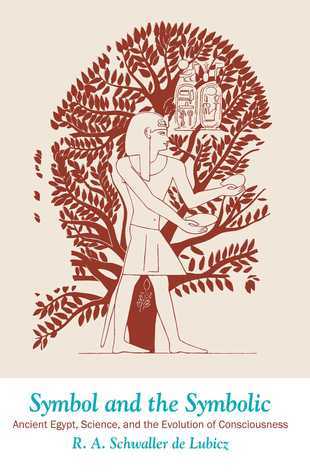
Symbol and the Symbolic: Ancient Egypt, Science, and the Evolution of Consciousness by R.A. Schwaller de Lubicz
Symbol and the Symbolic: Ancient Egypt, Science, and the Evolution of Consciousness by R.A. Schwaller de Lubicz
🚚 ক্যাশ অন ডেলিভারি সারা বাংলাদেশ 🕒 ৭২ ঘন্টার মধ্যে সারা দেশ এ ডেলিভারি
Couldn't load pickup availability
Symbol and the Symbolic: Ancient Egypt, Science, and the Evolution of Consciousness by R.A. Schwaller de Lubicz
Schwaller de Lubicz splits his analysis into a direct confrontation between two fundamentally incompatible modes of human thought: the Modern Analytic Mind and the Ancient Hieratic Mind. The book is designed to train the modern reader to dismantle their rigid, linear habits of thought to glimpse the universe as the ancients did.
The philosophical argument unfolds across three primary conceptual zones:
1. The Critique of Modern Quantitative Science
De Lubicz launches a fierce critique against Western mechanistic science. He argues that modern science is fundamentally limited because it relies entirely on quantitative analysis—measuring, naming, weighing, and breaking the physical world down into dead, isolated fragments. In doing so, modern humanity mistakes the mathematical description of a phenomenon for the living reality of the phenomenon itself.
2. The Nature of the "True Symbol"
The book establishes a strict, vital distinction between a mere "sign" and a true "symbol":
-
The Rational Sign: A utilitarian, arbitrary shortcut created by the intellect (e.g., a traffic sign or the written word "cat"). It has no intrinsic relationship to the reality it describes; it is a dead label.
-
The Sacred Symbol: A natural, inevitable expression of a cosmic law or functional energy. For example, a jackal is not chosen randomly to represent death/embalming; the animal's biological nature, acute senses, and nocturnal behavior are the physical manifestation of that specific, transformative cosmic force on Earth.
Symbol and the Symbolic serves as an irreplaceable guide to understanding the "Symbolist" school of Egyptology, which directly inspired modern alternative researchers like John Anthony West:
1. The Living Language of Neters
A major theme is the redefinition of Egyptian "gods." De Lubicz demonstrates that the Neters (Isis, Osiris, Thoth, Ra) were never seen by the temple elite as eccentric, mythological characters ruling the sky. Instead, they were personifications of cosmic principles, vital laws, and natural functions—such as gestation, decomposition, crystallization, and reflection. The symbols used to depict them are an esoteric, visual shorthand for these fundamental universal laws.
2. Teleological Evolution of Consciousness
The book presents a teleological theory of human history, suggesting that human consciousness evolves through grand, cosmic cycles. Rather than viewing ancient humanity as primitive children climbing a slow ladder toward modern technical enlightenment, de Lubicz argues that the Old Kingdom of Egypt represented a dazzling high point of intuitive, spiritual consciousness that modern humanity has completely forgotten.
Language: English.
Genre: Mythology.
Binding: সেলাই করা বাইন্ডিং
Quality: Premium Quality Books.
Printing: High Quality Printing.
Paper: Eye Friendly paper (Cream White)
Cover: Matt cover (Paperback).