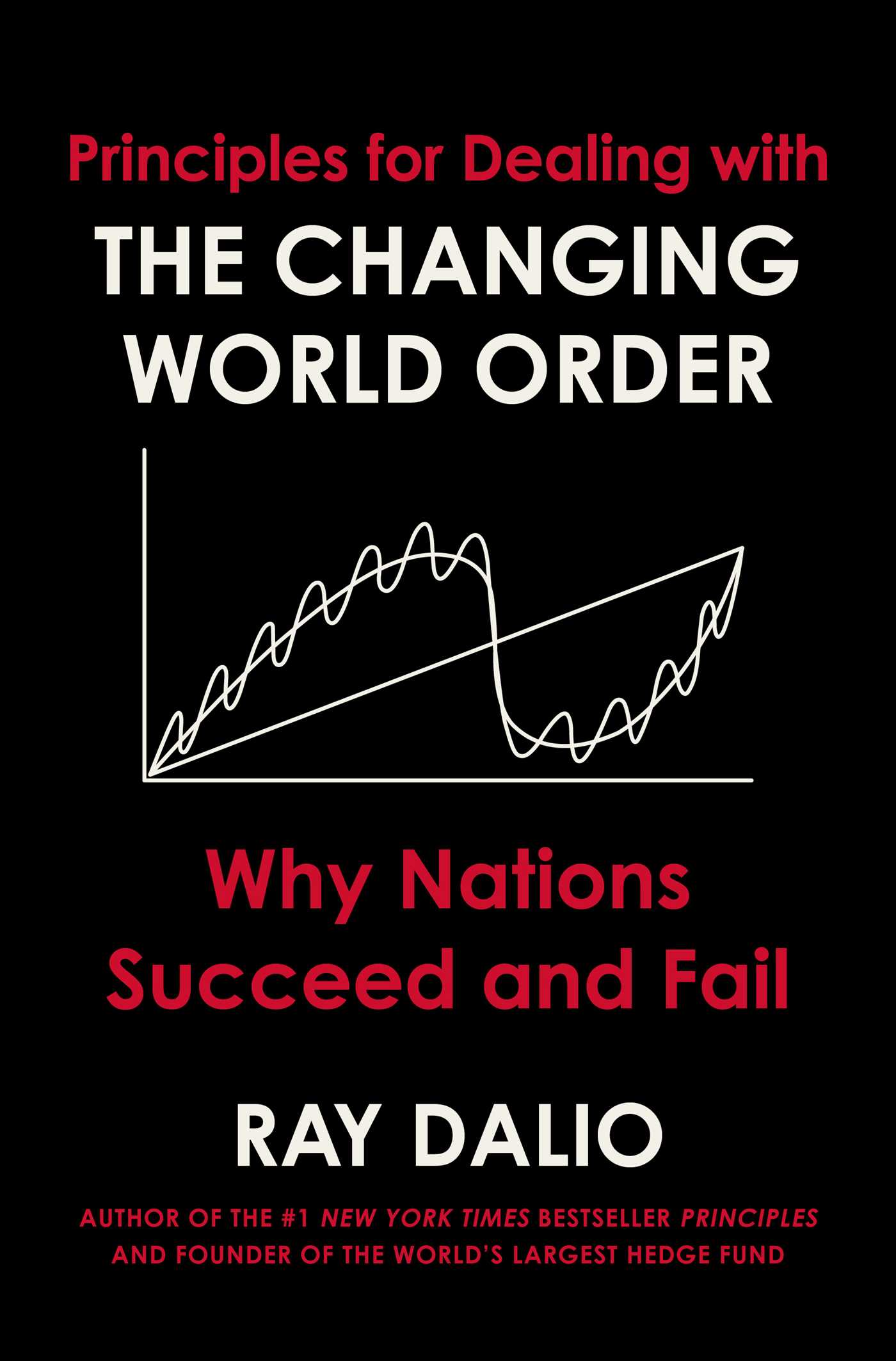
Principles for Dealing with the Changing World Order: Why Nations Succeed and Fail by Ray Dalio
Principles for Dealing with the Changing World Order: Why Nations Succeed and Fail by Ray Dalio
🚚 ক্যাশ অন ডেলিভারি সারা বাংলাদেশ 🕒 ৭২ ঘন্টার মধ্যে সারা দেশ এ ডেলিভারি
Couldn't load pickup availability
Principles for Dealing with the Changing World Order: Why Nations Succeed and Fail by Ray Dalio
Dalio’s central thesis is that empires follow an incredibly consistent archetype that typically lasts roughly 200 to 250 years from rise to collapse. Driven by structural advancements, human nature, and financial cycles, this lifecycle transitions seamlessly through three distinct phases:
1. The Rise (New Order Creation)
Following a major conflict or revolution, a dominant power emerges victorious and sets new global rules. This phase is characterized by low debt levels, a strong education system, rising productivity, technological innovation, and a strong work ethic. As the country's share of global trade grows, its currency naturally becomes the world’s preferred reserve currency, granting it immense economic power.
2. The Top (The Overstretched Plateau)
Prosperity breeds complacency, luxury, and high costs of living. To maintain its global footprint and lifestyle, the empire begins borrowing heavily, sowing the seeds of a future debt crisis. Other competing nations begin copying the empire’s technologies and manufacturing methods at a fraction of the cost, eroding the dominant power's competitive edge. A massive wealth gap widens between the rich, who benefit from financial markets, and the working class.
Dalio isolates three interconnected, cyclical forces that are moving simultaneously today to create the most volatile geopolitical climate since the 1930s:
1. The Long-Term Debt and Capital Market Cycle
When central banks hold interest rates near zero or actively purchase bonds (quantitative easing), they create massive amounts of cheap credit. Dalio warns that printing money to monetize structural deficits historically acts as a ticking time bomb. Eventually, creditors realize they are being paid back in depreciated, low-purchasing-power currency, causing a flight away from fiat currency into hard assets (gold, real estate, commodities).
2. The Internal Order and Disorder Cycle (Wealth & Political Gaps)
When the top 1% holds a disproportionately massive amount of a nation's total wealth, social cohesion fractures. During these times, populist leaders emerge on both the political Left and Right. Dalio underscores a dangerous pattern: as political factions lose the willingness to compromise, they begin prioritizing "winning at all costs," which systematically breaks down the rule of law and introduces a high risk of civil conflict.
Language: English.
Genre: Finance.
Binding: সেলাই করা বাইন্ডিং
Quality: Premium Quality Books.
Printing: High Quality Printing.
Paper: Eye Friendly paper (Cream White)
Cover: Matt cover (Paperback).