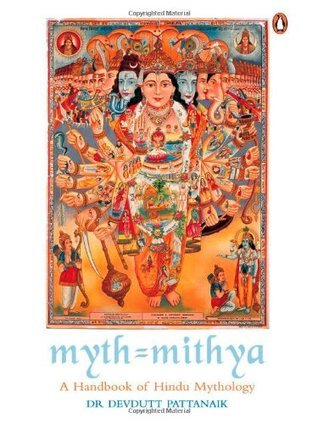
Myth = Mithya: A Handbook of Hindu Mythology by Devdutt Pattanaik
Myth = Mithya: A Handbook of Hindu Mythology by Devdutt Pattanaik
🚚 ক্যাশ অন ডেলিভারি সারা বাংলাদেশ 🕒 ৭২ ঘন্টার মধ্যে সারা দেশ এ ডেলিভারি
Couldn't load pickup availability
Myth = Mithya: A Handbook of Hindu Mythology by Devdutt Pattanaik
The core thesis of the book hinges on a mathematical equation provided by Pattanaik: Myth = Mithya. While classical Western philosophy often contrasts truth with myth, ancient Indian philosophy uses Mithya to represent "subjective reality"—the world as we perceive it, colored by human ego and emotion, distinct from Satya (absolute, objective truth).
The handbook is structurally organized into three progressive, thematic layers that mirror the evolution of cosmic consciousness in Hindu thought:
1. Brahma: Human Devised Reality (The Ego and Mind)
The first section examines the nature of human consciousness, fears, and the ego. Pattanaik introduces the creator god, Brahma, who symbolizes the human mind trying to map out, dominate, and categorize the chaotic world. He addresses how the stories of Brahma's children (the sages and demons) reflect the psychological struggle between animal instincts and cultural civilization.
2. Vishnu: Social Ordered Reality (The Preserver)
The largest section of the book handles the concept of Dharma (cosmic and social order). Pattanaik explores how Vishnu descends into the material world via various Avatars (incarnations like Rama and Krishna) to balance the scales of society. Rather than acting as a rigid moral judge, Vishnu is framed as an empathetic cosmic strategist who adapts his rules to match the changing contexts, eras, and psychological developments of humanity.
3. Shiva: Essential Reality (The Destroyer and Ascetic)
The final section shifts away from society entirely to look at the inner self (Atman). Shiva represents absolute detachment, asceticism, and the dissolution of the human ego. Pattanaik analyzes the structural tension between Shiva the hermit and his consort Parvati (the Mother Goddess), showing how their relationship harmonizes the extreme pull between total worldly engagement (householder life) and spiritual withdrawal (monastic life).
Pattanaik helps the reader look past the literal plot points of ancient stories to decode their underlying psychological and philosophical blueprints:
1. The Meaning of Symbols
A major highlight of the handbook is its decoding of iconic Hindu iconography. Pattanaik explains that a deity's weapons, posture, and vehicles are not decorative, but visual language:
-
The Conch Shell (Shankha): Symbolizes the vibrations of communication and cosmic awakening.
-
The Discus (Sudarshana Chakra): Represents the inescapable, cyclic wheel of time (Kala).
-
Deity Mounts (Vahanas): An animal vehicle (like Shiva's bull or Durga's lion) represents a wild, natural instinct that the deity has successfully tamed and harnessed.
Language: English.
Genre: Mythology.
Binding: সেলাই করা বাইন্ডিং
Quality: Premium Quality Books.
Printing: High Quality Printing.
Paper: Eye Friendly paper (Cream White)
Cover: Matt cover (Paperback).