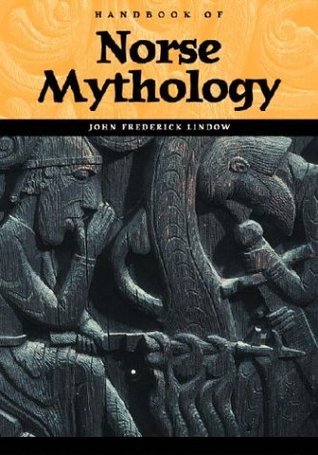
Handbook of Norse Mythology by John Lindow
Handbook of Norse Mythology by John Lindow
🚚 ক্যাশ অন ডেলিভারি সারা বাংলাদেশ 🕒 ৭২ ঘন্টার মধ্যে সারা দেশ এ ডেলিভারি
Couldn't load pickup availability
Handbook of Norse Mythology by John Lindow
Norse mythology is exceptionally difficult to track because the Viking Age was almost entirely oral. The stories we have today were written down centuries later by Christian scholars who often reframed the pagan gods to fit a monotheistic worldview. Lindow addresses this historical friction by dividing the handbook into four distinct, functional sections:
1. Historical Background & Sourcing
The book opens with a vital critique of our primary sources. Lindow examines the archaeological evidence (runestones, weapon caches, burial mounds) and contrasts it with the surviving written literature. He meticulously analyzes the Poetic Edda (a collection of anonymous traditional poems) and the Prose Edda written by the 13th-century Icelandic chieftain Snorri Sturluson, explaining how Snorri's Christian bias altered the narrative landscape.
2. Time and Space in the Norse Cosmos
Lindow maps out the unique, highly unstable structural geography of the Norse world. He explores the cyclical nature of mythic time, starting from the primordial thawing of frost in Ginnungagap to the creation of the nine realms held within the cosmic ash tree, Yggdrasil. This section lays the groundwork for understanding the inherent vulnerability of the Norse universe.
Rather than simply summarizing standard tales, Lindow teaches his readers how to decode the underlying social values embedded within the mythology:
1. The Fatalistic Universe
Lindow emphasizes that unlike many global mythologies where the gods are immortal and omnipotent, the Norse deities are trapped in time. They know exactly how, when, and by whom they will be killed. This creates a cosmic worldview defined by a profound, heroic fatalism. Honor is not derived from winning—since total annihilation at Ragnarok is completely inevitable—but from how one fights and faces their unavoidable doom.
2. Structural Inversion: The Jötnar vs. The Gods
The handbook deconstructs the traditional Western tendency to view the giants (jötnar) as purely "evil" monsters. Lindow demonstrates that the relation between the gods and the giants is actually an anthropological exploration of culture versus nature. The gods represent order, law, construction, and agriculture; the giants represent the raw, unyielding elements of the Scandinavian landscape (frost, fire, avalanches). The two factions are deeply intertwined, frequently intermarrying and trading, reflecting a worldview where chaos is a necessary, permanent neighbor to civilization.
Language: English.
Genre: Mythology.
Binding: সেলাই করা বাইন্ডিং
Quality: Premium Quality Books.
Printing: High Quality Printing.
Paper: Eye Friendly paper (Cream White)
Cover: Matt cover (Paperback).