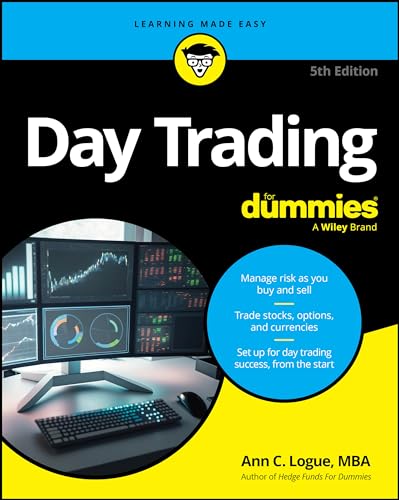
Day Trading For Dummies by Ann C. Logue
Day Trading For Dummies by Ann C. Logue
🚚 ক্যাশ অন ডেলিভারি সারা বাংলাদেশ 🕒 ৭২ ঘন্টার মধ্যে সারা দেশ এ ডেলিভারি
Couldn't load pickup availability
Day Trading For Dummies by Ann C. Logue
Logue opens the book by establishing a cold reality check: day trading is an intense profession where the vast majority of participants fail due to poor preparation. To prevent immediate ruin, she structures the essential operational layout that any novice must build before placing their first live trade:
1. Choosing the Target Market
Logue does not limit the book to stocks; she provides a thorough breakdown of the different arenas available to a short-term trader:
-
Equities (Stocks): Highly familiar, but requires complying with the Pattern Day Trader (PDT) rule, which mandates maintaining a minimum account equity of $25,000 in the United States.
-
Foreign Exchange (Forex): Offers massive liquidity, low barriers to entry, and 24-hour trading, though it carries risks due to high leverage options.
-
Futures & Options: Highly efficient derivatives that allow traders to hedge or speculate on indices and commodities without owning the underlying asset.
2. The Hard Infrastructure Setup
Trading from a mobile phone on a patchy Wi-Fi connection is a recipe for disaster. Logue outlines the required professional infrastructure: a high-speed, hardwired internet connection, a dedicated computer with multiple monitors, a dependable backup power supply, and—most importantly—a direct-access broker that prioritizes rapid execution speeds over pretty visual interfaces.
The Analytical Toolkit: Mechanics & Strategy
The core technical sections of the book provide an accessible, high-level overview of the two primary methodologies used to spot short-term price inefficiencies before the market closes at the end of the day:
1. Technical Analysis (The Day Trader's Bread and Butter)
Logue introduces the basic chart components used to track supply and demand in real time. She details how to read classic candlestick formations, identify horizontal support and resistance lines, and navigate standard indicators such as Moving Averages, the Relative Strength Index (RSI), and Bollinger Bands to identify overbought or oversold conditions.
2. Fundamental and Macro Tracking
While long-term value investing fundamentals (like multi-year balance sheet reviews) matter less to a day trader, short-term fundamental catalysts are critical. Logue explains how to track the economic calendar—monitoring macroeconomic events such as Federal Reserve interest rate announcements, consumer price index (CPI) reports, and corporate earnings releases—which inject the volatile price expansions that day traders rely on for profit.
Language: English.
Genre: Trading.
Binding: সেলাই করা বাইন্ডিং
Quality: Premium Quality Books.
Printing: High Quality Printing.
Paper: Eye Friendly paper (Cream White)
Cover: Matt cover (Paperback).