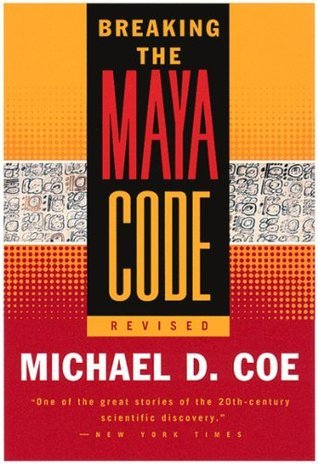
Breaking the Maya Code by Michael D. Coe
Breaking the Maya Code by Michael D. Coe
🚚 ক্যাশ অন ডেলিভারি সারা বাংলাদেশ 🕒 ৭২ ঘন্টার মধ্যে সারা দেশ এ ডেলিভারি
Couldn't load pickup availability
Breaking the Maya Code by Michael D. Coe
The core theme of the book is that the tragic erasure of a civilization's history can be reversed through modern structural linguistics. For nearly four centuries, Western scholarship viewed the magnificent stone monuments in the jungles of Mexico, Guatemala, Belize, and Honduras as silent, unreadable anomalies. Coe traces the history of how this code was broken by organizing the narrative into four major chronological acts:
The narrative begins with a deep historical tragedy. In 1562, Franciscan Bishop Diego de Landa ordered the systematic burning of dozens of priceless, bark-paper Maya codices, viewing them as "superstition and lies of the devil." Ironically, de Landa later wrote a manuscript, Relación de las cosas de Yucatán, containing a flawed "alphabet" matching Spanish letters to Maya glyphs. This surviving document, discovered centuries later in a Madrid library, became the Rosetta Stone of Mesoamerica.
During the late 19th and early 20th centuries, Mayan studies were dominated by the brilliant but deeply dogmatic British archaeologist Sir Eric Thompson. Thompson held an unshakeable belief that Maya glyphs were purely ideographic—meaning they represented abstract, mystical cosmic concepts, calendars, and time symbols, rather than actual spoken language. Because of his immense academic authority, Thompson aggressively suppressed any scholar who argued that the glyphs could be read phonetically, gridlocking the entire field for decades.
1. It Exposes the Danger of Academic Dogmatism
Breaking the Maya Code serves as a stark warning about how scientific progress can be completely halted when a single charismatic authority figure dominates a field. Coe does not hold back in his criticism of Eric Thompson, demonstrating how Thompson’s personal biases, arrogance, and refusal to consider opposing ideas set the decipherment of the Maya language back by at least thirty years.
2. It Proves the Universal Mechanics of Written Language
The book is highly valued by linguists because it documents a universal human truth: no matter how isolated a civilization is from the rest of the world, human brains naturally design writing systems using identical core principles. Whether it is Egyptian hieroglyphs, Sumerian cuneiform, Chinese characters, or Maya glyphs, every complex ancient writing system eventually evolves into a mixed logosyllabic structure to capture the nuances of human speech.
3. It Restored History to a "Prehistoric" Culture
Before this decipherment, Western textbooks frequently categorized the pre-Columbian Americas as "prehistoric"—falsely implying they lacked real historical records. Coe’s book demonstrates how decipherment shattered this Eurocentric bias. By unlocking the glyphs, archaeologists transformed the Maya from an anonymous, imagined race of peaceful, star-gazing priests into real, complex historical individuals who waged wars, formed political alliances, wrote literature, and built dynamic dynastic states.
Language: English.
Genre: Anthropology.
Binding: সেলাই করা বাইন্ডিং
Quality: Premium Quality Books.
Printing: High Quality Printing.
Paper: Eye Friendly paper (Cream White)
Cover: Matt cover (Paperback).