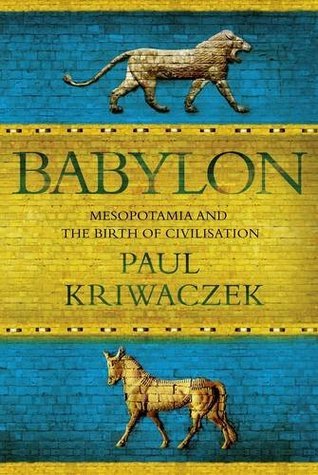
Babylon: Mesopotamia and the Birth of Civilization by Paul Kriwaczek
Babylon: Mesopotamia and the Birth of Civilization by Paul Kriwaczek
🚚 ক্যাশ অন ডেলিভারি সারা বাংলাদেশ 🕒 ৭২ ঘন্টার মধ্যে সারা দেশ এ ডেলিভারি
Couldn't load pickup availability
Babylon: Mesopotamia and the Birth of Civilization by Paul Kriwaczek
Kriwaczek structures the book like an epic multi-generational biography, organized around the rise and fall of dominant technological and political eras:
1. The Sumerian Prelude (c. 4000–2334 BCE)
The book opens in the marshy southern floodplains of the Tigris and Euphrates rivers. Kriwaczek details the rise of Uruk and Eridu, explaining how the invention of large-scale irrigation forced localized tribes to band together, establishing the world's first true cities. He chronicles the transition from tribal networks to dynamic city-states governed by dynastic kings (Lugals) who drew their authority directly from temple patron deities.
2. The First Empires (c. 2334–2154 BCE)
The narrative shifts from isolated city-states to sweeping regional consolidation. The author brings to life Sargon of Akkad, the world's first true empire builder, who unified Sumer and Akkad into a centralized military machine. Kriwaczek explains how this era permanently changed human governance by replacing local municipal rule with a sprawling, state-wide imperial bureaucracy.
3. The Lawgiver and the Rise of Babylon (c. 1792–1750 BCE)
The focus centers squarely on King Hammurabi of Babylon. Kriwaczek frames Hammurabi not just as a conqueror, but as an administrative genius who transformed a minor Amorite settlement into the permanent cultural axis of the Near East. The text dives deep into the Code of Hammurabi, illustrating how uniform laws were used to bind diverse, multi-ethnic populations together under a centralized legal authority.
Kriwaczek emphasizes that the creation of the city was a psychological revolution just as much as a technological one. For the first time in human history, people had to live, trade, and work alongside thousands of complete strangers. To survive this social friction, Mesopotamians had to invent entirely new abstract frameworks: formalized social hierarchies, legal systems, standardized weights and measures, and institutionalized religion.
Language: English.
Genre: Mythology.
Binding: সেলাই করা বাইন্ডিং
Quality: Premium Quality Books.
Printing: High Quality Printing.
Paper: Eye Friendly paper (Cream White)
Cover: Matt cover (Paperback).