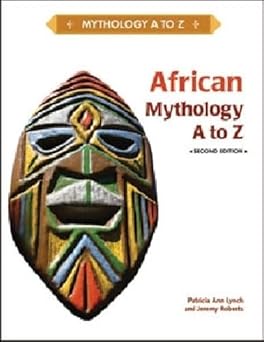
African Mythology A to Z by Patricia Ann Lynch , Jeremy Roberts
African Mythology A to Z by Patricia Ann Lynch , Jeremy Roberts
🚚 ক্যাশ অন ডেলিভারি সারা বাংলাদেশ 🕒 ৭২ ঘন্টার মধ্যে সারা দেশ এ ডেলিভারি
Couldn't load pickup availability
African Mythology A to Z by Patricia Ann Lynch , Jeremy Roberts
Rather than limiting their scope to a handful of well-known stories, the authors organize hundreds of entries across Africa's primary cultural and geographic zones. This structural blueprint helps readers map out the distinct pantheons and ancestral landscapes of the continent:
1. West African Cosmic Orders
The handbook places significant emphasis on the complex, highly structured urban pantheons of West Africa:
-
The Yoruba Pantheon (Orishas): Detailed breakdowns of highly distinct spiritual forces such as Olodumare (the supreme creator), Shango (god of thunder and lightning), Ogun (deity of iron and warfare), and Yemaya (mother goddess of the oceans).
-
The Fon and Ashanti Systems: Exploration of the Dahomey (Fon) creation cycles led by the twin creator deities Mawu-Lisa, and the Ashanti stories centered around the supreme sky god Nyame.
2. East and Central African Dynamics
Shifting to the pastoralist and agrarian networks of the Rift Valley and the Congo Basin:
-
The Maasai and Kikuyu Beliefs: Profiles on localized sky and mountain deities, such as Enkai (the dual-natured Maasai god of rain and drought) and Murungu (the creator residing atop Mount Kenya).
-
The Buganda Kingdom: Entries tracing the complex lineage of the Balubaale (deified heroes and nature spirits), including Kibuuka, the ancient god of war.
Beyond simple definitions, African Mythology A to Z serves as an educational tool that unpacks the fundamental themes underpinning sub-Saharan thought:
1. The High God and the Divine Bureaucracy
A universal pattern highlighted throughout the reference manual is the concept of a Supreme High God who created the universe but eventually distanced themselves from humanity due to a cosmic misunderstanding or human transgression. Consequently, everyday spiritual life does not involve appealing directly to this remote creator. Instead, humans interact with a network of lesser gods, nature spirits, and divine intermediaries who act as celestial bureaucrats.
2. The Living Dead (Ancestral Veneration)
The handbook beautifully explains that in African cosmology, death is not a permanent exit from society. Ancestors are categorized as the living dead—active, deeply invested members of the family unit who protect their descendants, enforce moral codes, and punish societal violations. Multiple entries explain how libations, offerings, and naming rituals are vital communication technologies used to maintain a balanced contract with these ancestral guardians.
Language: English.
Genre: Mythology.
Binding: সেলাই করা বাইন্ডিং
Quality: Premium Quality Books.
Printing: High Quality Printing.
Paper: Eye Friendly paper (Cream White)
Cover: Matt cover (Paperback).